Q:
How is the threat tier of an enemy’s moves decided? Is a high-threat move always a red-light, blue-light or black-aura move? The gaps between moves clearly run long and short too, so how else can we sort them?
A:
High-threat moves are not limited to those few kinds. Some moves carry no special flash and no black-aura tell at all, yet still do heavy damage, or still cannot be blocked.
- Some of the weighty, powerful moves still deal heavy health loss, drain Sha-Chi through an ordinary guard, and knock you back.
- Thread attacks, self-destruct mobs and the like cannot be stopped by ordinary means.
Enemy move weight
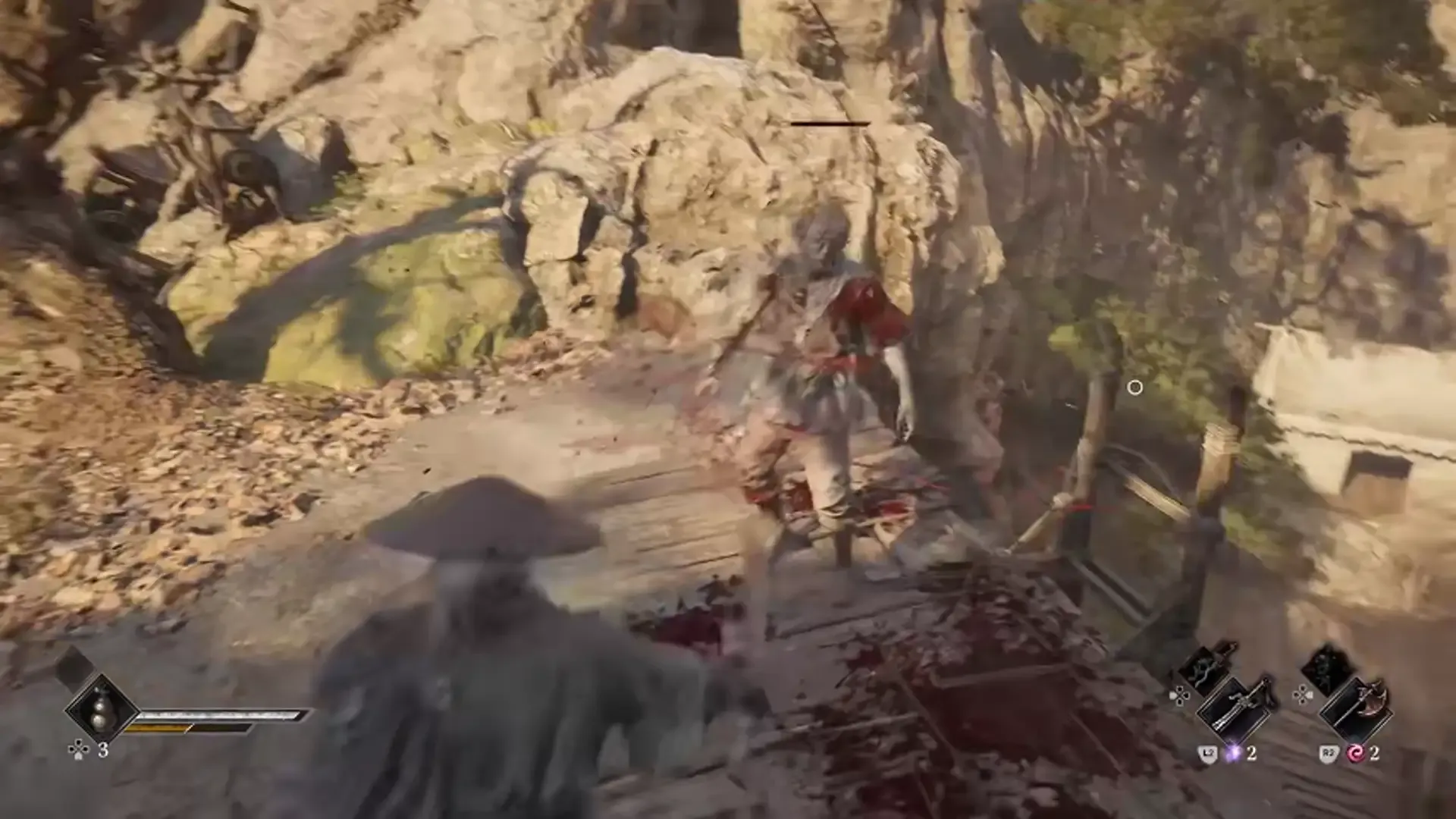
How dangerous an enemy move is comes down more to how it looks as a whole — the weight of the weapon and the weight of the motion. As a rule, moves that whip the body around in a big circle, hold the weapon high overhead, leap in, or wind up to charge are heavy moves, and their health loss, Sha-Chi drain and knockback all hit harder.
In how the weight is arranged, the closing move of a light- or medium-weapon enemy’s attack string is usually a heavy one; elsewhere the string mixes light and heavy too, but heavy moves are a fairly small share. With a heavy-weapon enemy you have to be careful — the share of heavy moves inside its strings climbs sharply, and sometimes dodging is the better answer.
Extra threats on enemy moves
The extra threat of red-light attacks is that they cannot be blocked.
The extra threat of the black-light is that a guard-type answer gets its Sha-Chi cut down to a sliver — the gauge does not break, but almost nothing is left in it.
A few other moves also come with a status effect attached.
Short and long intervals between enemy moves
If the usual interval between a standard sword-and-blade enemy’s moves is taken as the middle of the range, then ordinary enemies sit mostly at short-to-medium, medium and medium-to-long, while lumbering enemies sit at medium, medium-to-long and long. The very short (short) and very long intervals turn up almost only on special showpiece moves, and are a very small share.
All of this depends on how well the full release is designed. Design it well and every enemy will have a clear, internally logical fighting style, with its move weight and intervals following rules you can learn — easy to remember, easy to keep your hands warm on a replay.